Lila Lee-Morrison, PhD Writer. Scholar. Art Historian.
I am a visual culture theorist and art historian with research interests on the visuality of machine vision, histories of scientific images, image theory and the power relations of the gaze. My research output thus far has addressed specific case studies of machine vision technologies through analyses of their aesthetics, operational contexts, computational processes and image outputs. I examine the ways in which this technology can reconfigure modes of visual perception and intervene in socio-political and cultural forms of meaning. Case studies in my research have included drone warfare systems, automated facial recognition technology and environmental monitoring platforms and examining these within art historical genres of portraiture and landscape. My research is conducted through an interdisciplinary lens engaging with discourse in the fields of media theory, postcolonial studies, philosophy of science, surveillance studies, environmental humanities and art theory.
My current research examines technical images of planetary-scale environmental monitoring technologies. I look to the epistemic role of earth observation in shaping and visualizing new ways of relating with the non-human. This includes a survey of works made by contemporary artists that critically examine technologies of imaging within a history of scientific observation as well as more contemporary modes of earth observation through the production of environmental data. These artworks run counter to scientific and military contexts of earth observation, and instead address the figuring of diverse subjectivities as enmeshed in both technical and environmental processes. This research is slated to be a forthcoming book and is supported by the Andy Warhol Foundation Arts Writers Grant (Book category, 2023).
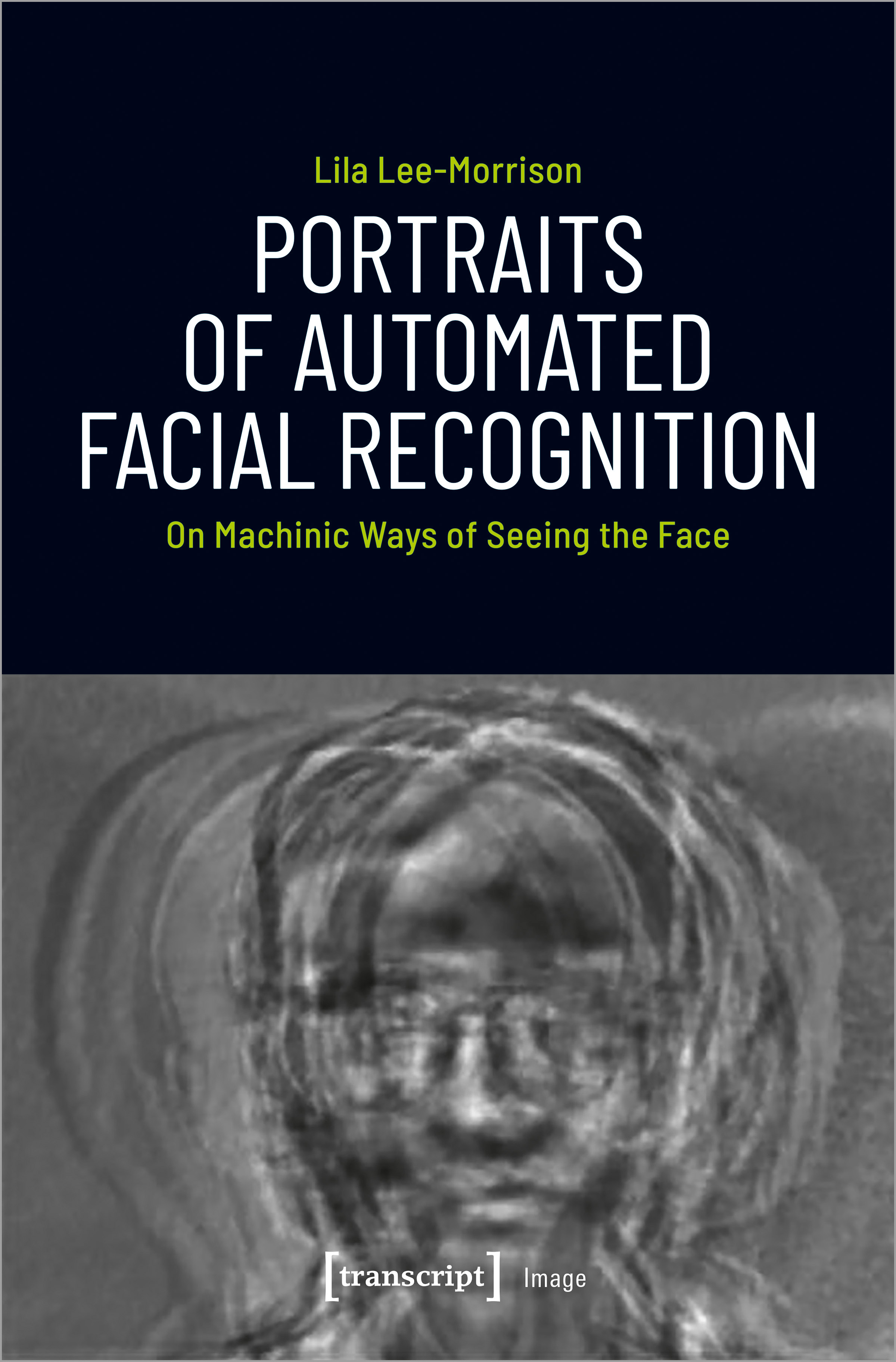
My monograph titled, Portraits of Automated Facial Recognition: On Machinic Ways of Seeing the Face (Transcript Verlag, 2019) critically analyses the visuality of automated facial recognition technology through the eigenface algorithm as a case study in machinic vision and its concurrent modes of perception. It addresses a general problematic of facial recognition technology in asking how an act of recognition can be defined through a technical process. The primary visual logic is traced through the merging of statistics and vision, a method that is historically visualized through photographic practices of composite portraiture and within a context of the theory of eugenics. This discussion is expanded through countering statistical forms of seeing in the philosophical work of Ludwig Wittgenstein, his production of a composite portrait and his concept of aspect perception. The analysis then moves to a contemporary context through a survey of contemporary artworks by Zach Blas, Trevor Paglen and Thomas Ruff. Overall, this analysis highlights the contemporary social and political investments in technical representations of the face and asks what it means to see and be seen in the contemporary moment.
NEWS:
The book, Forty Viewpoints in Seven Instances on the Reconstruction of Two Environments by Björn Lövin, by Peo Olsson and published by Null and Void Books (2024) wins Swedish Book Art Award! I contributed the essay titled, “In between Images and Information: On the operational environments of Björn Lövin.” Congrats to Peo and Null and Void Books!!
Forthcoming /Recent Publications
- “Landscape,” Environmental Humanities Glossary: Emergent Key Terms. ed Ulrik Ekman and Daniel Irrgang. Copenhagen: University of Copenhagen, 2025.
- “The Aesthetics of Satellite Dis/Appearance: The repurposing of satellite images from reconnaissance to environmental monitoring,” Dis/appearance In and Of Photography, Distanz, forthcoming 2026.
- “Photobombing and Selfies: The Visibility of Atmospheric Mediation and Environing,” VIEW Journal, Vol. 14, 27, 2025.
- Article: “Machinic Landscapes: Aesthetics of the non-human,” in Media + Environment Journal, Special theme issue: Machinic Visions of the Planetary, Vol. 5:1, 2023.
- Essay: Living Memory: Lila Lee-Morrison on Kids and the surplus of the image in Artforum, November 2022.
 Lila Lee-Morrison, PhD. lilaleela@gmail.com